





Emergency DOCKET
on Jul 21, 2022
at 8:47 pm
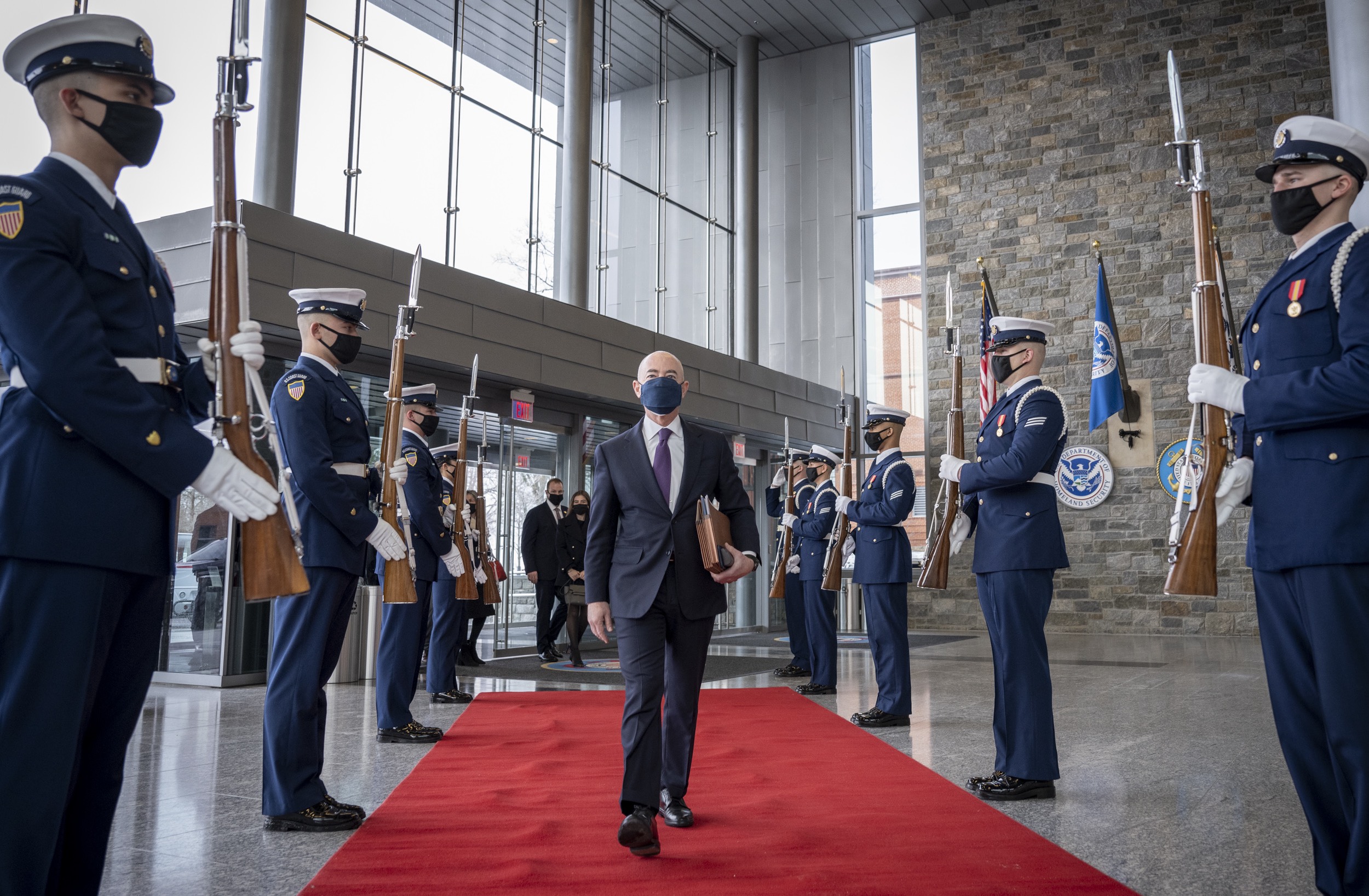
Homeland Stability Secretary Alejandro Mayorkas, found in this article in February 2021, wrote an immigration-enforcement memorandum that is being challenged at the Supreme Court. (Wikimedia Commons)
The Supreme Court docket will yet again weigh the govt branch’s authority to established immigration policy as some pink states assert that the Biden administration’s enforcement decisions are way too lax. The justices on Thursday agreed to acquire up a problem by Texas and Louisiana to a new federal coverage that prioritizes certain teams of unauthorized immigrants for arrest and deportation. The justices will listen to the scenario in late November with no waiting for a federal appeals court to weigh in.
The justices remaining in place a district-courtroom ruling striking down the policy, which means that the Biden administration simply cannot apply it although it waits for the Supreme Court docket to listen to argument and challenge a final decision.
In a 5-4 vote, the justices turned down the administration’s ask for to place the district court’s ruling on maintain and let the administration to apply the plan whilst litigation proceeds. Justices Sonia Sotomayor, Elena Kagan, Amy Coney Barrett, and Ketanji Brown Jackson indicated that they would have granted the request. It was the 1st recorded vote for Jackson, who was sworn in as the court’s newest justice on June 30 to triumph the now-retired Justice Stephen Breyer.
The plan at the centre of the dispute is outlined in a September 2021 memorandum by Secretary of Homeland Stability Alejandro Mayorkas on the federal government’s priorities for immigration enforcement. Outlining that there are in excess of 11 million noncitizens presently in the United States who could be topic to deportation, but that the Division of Homeland Security does not have the means to apprehend and deport all of them, the memorandum instructed immigration officials to prioritize the apprehension and deportation of a few teams of noncitizens: suspected terrorists, folks who have fully commited major crimes, and people caught at the border.
Texas and Louisiana went to federal courtroom in Texas to problem the plan. U.S. District Choose Drew Tipton vacated the policy on June 10, and the U.S. Courtroom of Appeals for the 5th Circuit turned down the Biden administration’s ask for to put Tipton’s ruling on keep whilst it appeals.
In a different scenario, Arizona, Montana, and Ohio also challenged the coverage in a federal district courtroom in Ohio. The district court docket barred the Biden administration from relying on the memorandum, but the U.S. Court docket of Appeals for the 6th Circuit reversed that ruling, finding that the states ended up unlikely to do well on the merits of their claim – a essential issue for analyzing no matter if to grant momentary reduction.
The Biden administration arrived to the Supreme Courtroom on July 8, asking the justices to briefly block Tipton’s ruling vacating the coverage nationwide. In a filing by U.S. Solicitor Typical Elizabeth Prelogar, the Biden administration complained that Tipton’s choice had disrupted DHS’s operations – and in specific its “efforts to target its constrained resources on the noncitizens who put up the gravest menace to countrywide protection, public safety, and the integrity of our Nation’s borders.”
Prelogar argued that the lawsuit really should not be allowed to go forward at all mainly because the states’ arguments that the enforcement choices created underneath the plan may indirectly cost them a lot more – because, for example, they may well have to shoulder the prices of holding noncitizens in jail or giving them with public gains – do not build a right to sue, “let on your own justify the disruptive relief entered listed here.” The states’ idea, she complained, “would make it possible for States to challenge just about any federal plan by leveraging even a dollar’s truly worth of incidental, indirect impact on condition expenditures into a nationwide vacatur or injunction.”
Tipton also lacked the ability to problem his ruling, Prelogar contended. The Supreme Court’s new decision in Garland v. Aleman Gonzalez created distinct, Prelogar wrote, that a provision of federal immigration law does not permit district courts “to compel the Government Department to comply with their interpretation of the related statutory provisions.”
Far more broadly, Prelogar noticed, “this scenario exemplifies a troubling trend” of states suing the federal authorities to prevent “the indirect, downstream outcomes of federal insurance policies,” prompting federal district courts to get nationwide reduction from these guidelines. These lawsuits, Prelogar emphasized, “allow solitary district judges to dictate countrywide plan, nullifying choices by other courts and forcing organizations to abruptly reverse study course while looking for evaluate of novel and contestable holdings.”
At the extremely the very least, Prelogar concluded, the justices must allow for the administration to apply the new policy outside the house Texas and Louisiana. Or, she instructed, the Supreme Courtroom could treat the administration’s filing as a petition for evaluate and quick-track the scenario for oral argument in the tumble.
Texas and Louisiana pushed back again towards the Biden administration’s arguments. The states pressured that they have a proper to sue for the reason that they have endured economic damage from the new plan – for illustration, mainly because it success in non-citizens remaining in state prisons for for a longer time than they usually would.
The states also rebuffed the administration’s rivalry that Tipton did not have jurisdiction to vacate the plan. The Biden administration waived its correct to increase this argument mainly because it did not elevate it in the district court right until after the final judgment, the states stated. But in any occasion, they included, the related provision basically “limits a district court’s jurisdiction to enter an injunction.” In this situation, Tipton only vacated the coverage he did not enter an injunction, which is a distinctive type of reduction.
Tipton’s conclusion to vacate the coverage was the right one particular, the states ongoing, simply because the plan conflicts with distinct statutory guidelines that Congress has provided DHS in federal immigration legislation to detain noncitizens. In addition, the states wrote, the coverage is not valid because DHS unsuccessful to comply with the federal legislation governing administrative organizations – for case in point, it did not present discover of, and an option to remark on, its new enforcement priorities, and it unsuccessful to properly look at “the significant charge of abscondment and recidivism amongst prison aliens and aliens with ultimate orders of removal” in achieving its conclusions.
A team of 19 states with Republican lawyers common, led by Arizona, filed a “friend of the court” transient supporting Texas and Louisiana. Like Texas and Louisiana, they emphasized that the new policy “continues to impose major expenses on the States, like billions of bucks in new costs relating to law enforcement, schooling, and health care programs.” But they also released a broader attack on U.S. immigration coverage frequently, describing a “corrosive disrespect” by DHS for the rule of legislation and characterizing the U.S.-Mexico border as “an unmitigated disaster.” They portrayed the new coverage as “the product or service of escalating lawlessness by DHS” and another chapter in “DHS’s serial refusals to look at the reliance passions of states.”
In a transient supporting the Biden administration, regulation professor Stephen Vladeck of the College of Texas Legislation Faculty suggested that Texas, fairly than DHS, has acted in negative faith, by applying a “deliberate system of judge-procuring.” Vladeck documented the frequency with which the point out has filed its lawsuits complicated the Biden administration’s insurance policies in subdivisions of a federal district court in which only one particular decide – virtually usually a decide appointed by a Republican president, and usually appointed by previous President Donald Trump – hears cases. This situation, Vladeck wrote, is steady with that exercise: Texas opted to file in a division around 100 miles absent from Austin, the state’s capital, and nowhere in the vicinity of the U.S.-Mexico border, exactly where there is only one choose: Tipton, a Trump appointee.
“Texas’s transparent decide-buying strategies disserve the general public fascination,” Vladeck argued. “If litigants like Texas are regularly in a position to get hold of nationwide injunctions from judges who they have virtually hand-picked to hear their grievances, it ought to go with no stating that community religion in the independence of the federal judiciary will be undermined.”
In a temporary purchase on Thursday afternoon without the need of outlining its reasoning, the court turned down the administration’s request to reinstate the coverage. But the justices agreed with Prelogar’s recommendation that they take up the case now, without waiting for the 5th Circuit to determine the government’s attractiveness. The court docket set the scenario for argument in late November, and it directed the Biden administration and the states to address three inquiries: no matter whether the states have a suitable to deliver their lawsuit whether or not the plan is steady with federal immigration regulation and the federal law governing administrative agencies and regardless of whether Tipton experienced the electrical power to established aside the plan.
The conclusion to hear the circumstance arrives significantly less than a thirty day period after the justices decided a different substantial-profile dispute in between Texas and the federal government in excess of immigration policy. On June 30, in a single of the final views of the 2021-22 phrase, the court docket ruled 5-4 in Biden v. Texas that the administration could terminate the controversial Trump-era “remain in Mexico” program for persons trying to find asylum at the southern border.
This short article was at first released at Howe on the Court.




More Stories
Navigating Tax Complexities: The Indispensable Role of Tax Lawyers
Unlocking Business Success: The Role of Corporate Attorneys
Deadline Approaching: Form I-9 Virtual Inspection of Employment Authorization and Identity Documents will End on July 31, 2023